Port Tampa Bay charts a bigger course with major expansion projects
· anastasia dawson
Source Summary
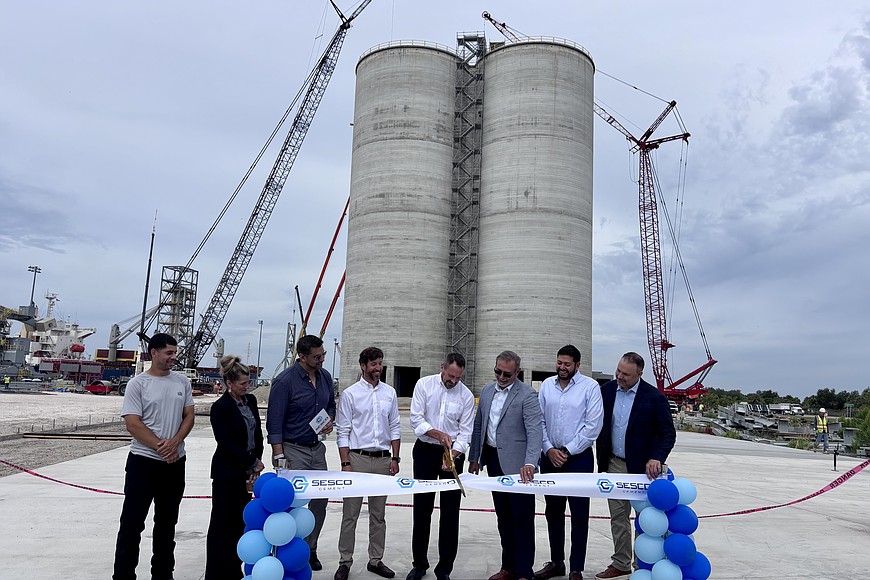
____________ Bottom line Key takeaway: Port Tampa Bay has undertaken multiple infrastructure projects aimed at expanding cargo capacity to keep up with rising demand. Core challenge: Accommodating more cruise ship passengers, bigger ships and increased cargo loads. What’s next: The port is preparing to dredge its 42-mile long channel next year, while other projects are ongoing over the next decade. Down a long and winding road on a muggy Tuesday morning in Gibsonton, politicians, business leaders and construction and maritime workers celebrated the opening of Sesco Cement’s new cement import terminal at Port Tampa Bay’s Port Redwing. The celebration was one of many on port officials’ calendars this year, as Port Tampa Bay has accelerated a series of major infrastructure projects aimed at increasing cargo capacity, improving supply-chain efficiency and supporting the rapid growth of Florida’s economy. The new Sesco Terminal is outfitted with, officials say, the largest wheel-mounted cement ship unloader in operation in the world; towering storage silos with nearly 100,000 tons of capacity; and an advanced mobile conveyor system. Upon full build-out it will be the largest cement terminal in Florida, positioning the Tampa Bay region and Port Tampa Bay as a critical gateway for global construction materials. “A terminal like this doesn’t just happen overnight,” Raul Alfonso, executive vice president and chief commercial officer at Port Tampa Bay, told the crowd gathered at the June 9 event. “It solidifies what we are all trying to do here at Port Tampa Bay. This port is growing just because it’s supporting Florida’s growth, and what Sesco Cement does here, and the other terminals as well, is deliver those critical materials that help to build our roadways, bridges, residences and so on. The materials that come through here are at the base of all this potential growth.” Clear vision Sesco’s new terminal, as with other expansion efforts this year, are all part of the port’s long-term Vision 2030 strategy — a plan authored in 2016 that seeks to strengthen Port Tampa Bay’s position as Florida’s largest and most diversified seaport. Port Tampa Bay operates across three main pillars: cargo and logistics (it’s Florida’s largest port by both cargo tonnage and land area); cruises; and shipbuilding and repair. Its Vision 2030 projects span the entire operation and include building warehouses and a new cruise terminal, expanding container and shipping terminals, installing new shipping cranes and, starting next year, dredging the port’s shipping channel by four feet to allow larger ships to access Tampa’s docks. Deepening and widening the 42-mile long channel to 47 feet will cost about $1.3 billion, Alfonso says — a mix of federal and local funding. Bringing in larger ships means the port will bring in more cargo, and Port Tampa Bay’s goal is to achieve 1 million TEUs of annual capacity. A standard, 20 foot long shipping container is one TEU, or twenty-foot equivalent unit, of cargo capacity while a 40-foot long container is two TEUs. Much of that cargo is a mix of agricultural and construction materials — essentials for Florida’s continued population and infrastructure growth. Concrete is the No. 2 consumed substance in the world, after water, says Sesco Cement CEO Rick Van Eyk, and Florida is the No. 2 consuming state for concrete in the nation. However, the state is also experiencing a shortfall in concrete production, Van Eyk says, which cemented the company’s decision to invest in building out their operations in Tampa Bay, one of the fastest growing markets in the southeast. “This facility is going to be our flagship asset for expanding growth across Florida and the Southeastern United States,” Van Eyk says. “It’s a long-term, significant investment.” More capacity Houston-based Sesco isn’t the only company investing in its future at Port Tampa Bay. In May, Mexico building materials producer Cemex completed a $36 million expansion of its aggregates terminal, significantly increasing its ability to receive and distribute construction materials throughout the region. That facility is expected to handle some 1.5 million tons of aggregate annually. Port Redwing, where the Sesco and Cemex terminals are located, is undergoing a major expansion itself thanks to a $24 million federal grant from the U.S. Department of Transportation’s Port Infrastructure Development Program. The project will extend Berth 300 by roughly 800 feet, creating a 1,300-foot berth capable of accommodating multiple vessels at once. When connected to adjacent facilities, the terminal offers nearly half a mile of continuous dock space. In April, the port welcomed two new post-Panamax ship-to-shore cranes , which are expected to become operational by the end of 2026. The cranes allow port workers to service up to three large container ships simultaneously while increasing lift capacity. Port officials say the massive cranes, which have a 197-foot outreach and 164-foot lift height, are a key component of a broader container terminal expansion effort that will increase the terminal footprint to approximately 100 acres and add a third deep-water berth. The improvements increase Port Tampa Bay’s capacity for dry bulk commodities such as aggregates, cement, gypsum and grain, Existing terminal users have already committed to handling more than 5.7 million tons of cargo annually, according to the Port’s strategic plan. Build the bay Port Tampa Bay President and CEO Paul Anderson has described the projects, in total, as critical investments that will help meet growing demand across Central and West Florida while improving supply-chain resilience and supporting economic development. The port's Vision 2030 strategy also includes future container-yard growth, additional warehousing and long-range plans for expanded cruise and cargo operations. Already, Port Tampa Bay handles about one-third of the state’s seaborne commerce, according to the Florida Ports Council. The port generates about $18 billion in annual economic impact and supports nearly 85,000 to 192,000 direct and indirect jobs, according to its website. “Most people don’t understand how important our ports are, because of that I-4 corridor, for construction, for infrastructure” says State Rep. Michael Owen, R-Apollo Beach. “You see politicians walk around all the time and talk about affordability, right? Affordability, affordability, they’re beating that drum. I know affordability starts with businesses like Sesco — cement is pretty much needed in almost everything that we do, with construction and infrastructure, so it’s critical that we create a climate where these folks can thrive.” ____________ By the numbers Jobs supported: 85,000 to 192,000 direct and indirect jobs Annual cargo tonnage: More than 34 million tons Total trade ranking: 24th in the US by total trade tonnage Annual cruise ship passengers: 1.8 million Annual cruise ship calls: 394 Cruise lines: 5 major lines (Carnival, Royal Caribbean, Norwegian, Margaritaville at Sea, Celebrity) Container volume: 262,803 TEUs Terminal Size: 100-acre container terminal Cargo cranes: 6 post-Panamax cranes Total vessels: more than 3,100 vessel calls per year Channel depth: 43 feet deep Source: Port Tampa Bay ____________