The CEO survey questions Puigdemont
· antoni bassas
Source Summary
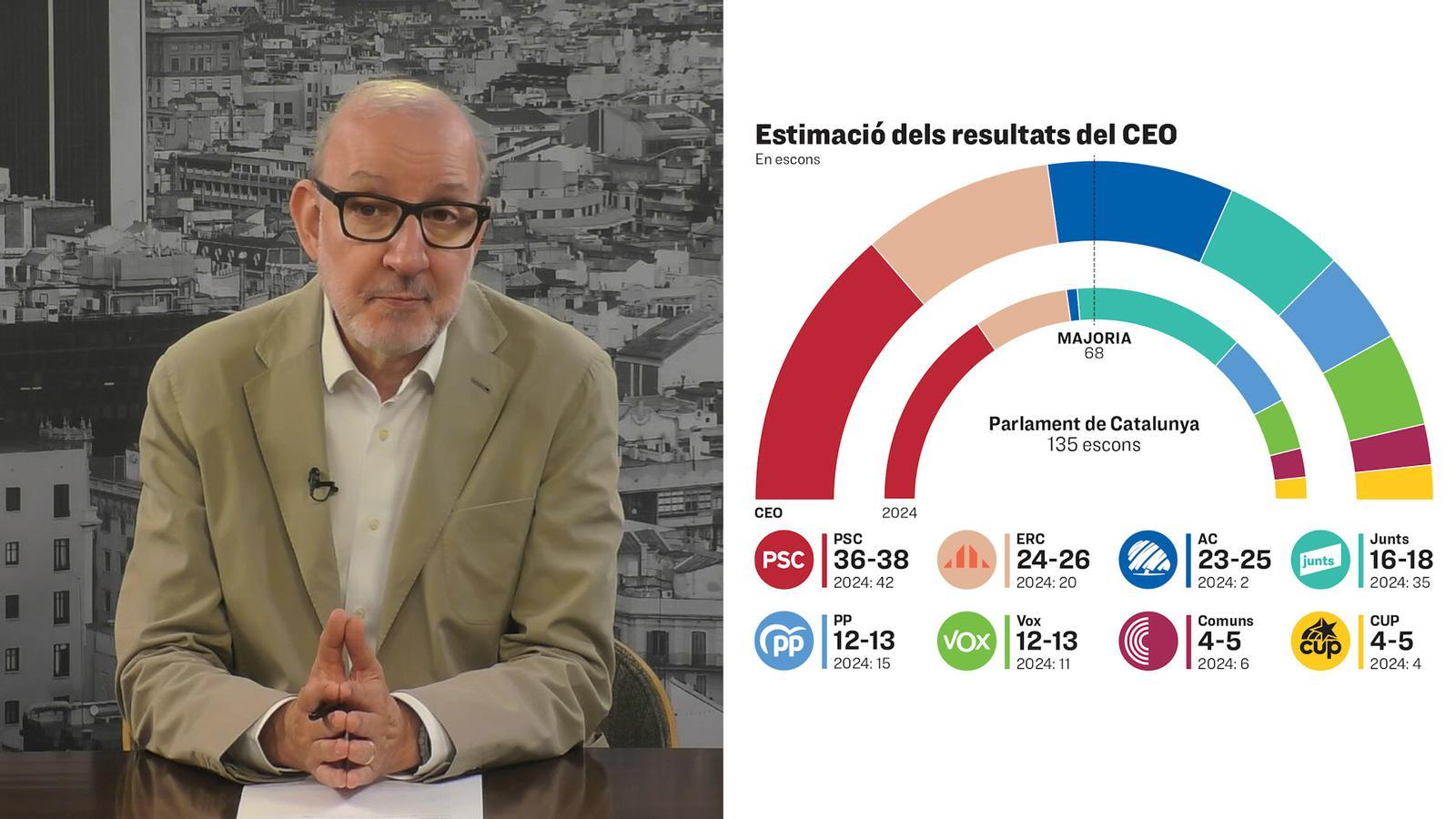
The result of the CEO survey puts numbers to a reality that we have all felt on the street, that of the growing voting intention of many people towards Aliança Catalana. What happens is that these numbers are -or would be, rather- a political tsunami and would represent a new page in the history of Catalan society.Going from the two deputies they have now to 23-25 as the CEO says is a tsunami. And for Junts, going from 35 to 13-18 is also one.When a party's main message is as basic as “Save Catalonia” and it is formulated by a leader who is not at all empathetic, at the head of an unknown team, and, even so, their electoral expectations skyrocket, it means that they have connected with the real or suggested discontents of many people, in relation to insecurity in the streets, Islamic radicalism, “massive” immigration, the emigration of well-prepared young Catalans, the decline of the language or fiscal plunder. Many Catalans feel – and what is worse, notice – that the country is slipping through their fingers. And pay attention, because the diagnosis has found a new centrality in which voters from the integrating Catalanism of Junts and Convergència to the bullfighting and Vox Legion Spanish nationalists have come to coincide. 1 out of every 3 votes that Aliança Catalana would win would come from Junts, and 1 out of every 4 votes would come from Vox, united by the flag of Islamophobia. The current parliamentary majority of PSC, Esquerra, Comuns would barely hold on, with the PSC dropping from 42 to 36-38. The government of appeasement, the one of management, is not being sufficient, among other things because the management is clearly improvable.That Aliança Catalana has detected the causes of discontent does not mean it has the capacity to remedy them. In fact, far-right parties are specialists in identifying culprits, but they are not as effective when it comes to finding solutions; on the contrary, because there can be a very short step from harshness to hatred that breaks societies. And with hatred, we are heading towards a new social fracture. Look at the report by Sebastián Marín , about how about 400 people of Moroccan origin gathered last night in L'Hospitalet de Llobregat to follow France-Morocco in the World Cup, in a meeting organized by the Moroccan consulate in Barcelona. Let's take it as a phenomenon: we cannot confuse the effects of radical Islamism, or the crime associated with the poverty of some immigrants, with living alongside neighbors of the Islamic faith. And the far-right, as we know, mixes everything up. The CEO's survey implicates Junts and within Junts, President Puigdemont. He should have been able to live in Catalonia for months now, under the amnesty law, but the judiciary has blocked it. This harms the expectations of a party that heavily relies on the almost iconic figure of the president in exile. At the same time, it is evident that we have gone from a Puigdemont with political initiative, who moved around Europe and overcame arrests and was very present in the media to direct the message, to a Puigdemont who basically only speaks on social media, with an often resentful tone, marked by the almost nine years of exile, the poor results of the negotiation with the PSOE, which conveys the idea that he doesn't care about the PP or the PSOE, because for Catalonia's purposes they are the same. Puigdemont had the status of a political rock star. Today, Aliança Catalana is acting as a substitute for the interest in politics, for the emotional vote, that the Process represented. And Junts will not be able to address it effectively if it does not stop being a party angry with the world (for whatever reason it may have) and begins to generate confidence and pride among the people.