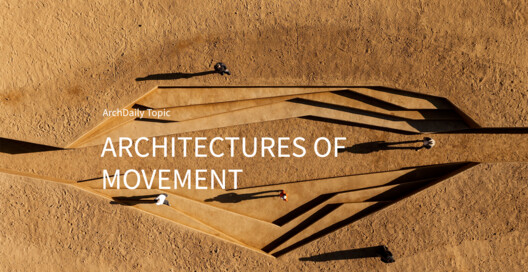
Architectures of Movement: ArchDaily's July Editorial Focus
· romullo baratto
Source Summary
Every twelve years, the banks of the Ganges at Prayagraj become one of the largest cities on Earth — and then disappear. The Maha Kumbh Mela draws over 400 million pilgrims across six weeks, requiring the construction of a full urban infrastructure: pontoon bridges, field hospitals, kilometers of temporary roads, a grid of tent cities visible from space. When the festival ends, it is dismantled entirely. No gathering in human history produces a more complete architecture of movement; built for arrival, engineered for transience, and designed to leave no permanent trace. The Kumbh Mela is exceptional in scale, but not in condition: movement has become a defining spatial problem of the century.
Advertisement