ITL’s age estimation headway in Germany proves market, regulatory readiness
· chris burt
Source Summary
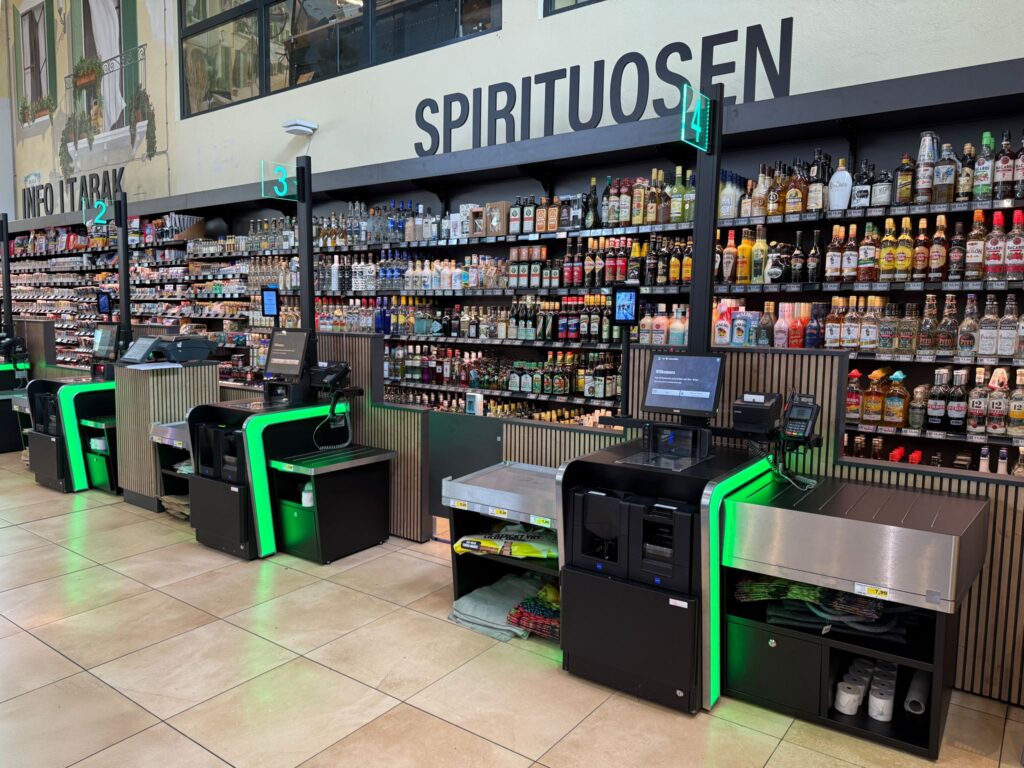
Supermarket automation like self-checkout lanes and age assurance technologies are both familiar subjects to most people at this point; not so many would draw a connection between the two trends. But Innovative Technology Limited (ITL) is serving the cross-over point between these two trends with a growing list of deployments. Age checks for the online world have made headlines around the world this year and last. In the meanwhile, ITL’s biometric age estimation hardware solutions have been used at a growing number of stores in an increasing number of countries to strengthen regulatory compliance, reduce conflicts between customers and staff, increase automation and create staff efficiencies. The advantages are not only seen by integrators as the technology provides a seamless experience for the end-customer too. The initial deployments of ITL’s MyCheckr provide age estimation at traditional points-of-sale to assist retail staff. Now the company is increasingly focussed on self-checkouts, Christian Czeskleba, senior business manager of ITL’s Biometrics business line, tells Biometric Update in an interview. While in-person age assurance gets less attention than its online cousin, “we can see that it’s definitely gaining traction” he says. Testing and early production implementations have shown several benefits to ITL’s automated age checks. Some of what ITL and its partners have learned, was expected, Czeskleba says. Early deployments “revealed what we had known already, which was that the cost saving is the main driver from the operator point of view.” But they also indicated other, less obvious benefits. While introduced primarily to ease regulatory compliance and responsible sales of age-restricted goods, Czeskleba notes that early integrations prompted positive feedback about the automation aspect “from the operations part of the supermarket business and shoppers approve positively too.” Perhaps more surprising, stores with MyCheckr deployed for age estimation soon discovered significant decreases in shrinkage. While Czeskleba is clear that this is “not the purpose of the product,” customers appear less tempted to skip scanning items. The return on investment can be clearly shown in the reduced number of engagements required of staff at self-checkout kiosks. Feedback from a key German retail customer confirmed that up to “85 percent of age checks were completed with ITL technology during self-checkout, meaning reduced waiting time for customers.” The acceleration of ITL’s rollouts is also self-reinforcing, as early adopters demonstrate increasing comfort with the technology and its benefits for others. “We see a change in the perception of our technology,” Czeskleba says. “What we have seen throughout our tests is that from the beginning, you could see in the first weeks of use, the acceptance of people using it and the usage went up.” Those customers then reuse the technology, and the user base builds over time. The growing demand for MyCheckr and MyCheckr Mini to perform age estimation in retail settings or biometric access control in regulated facilities like casinos is seen in ITL’s recent expansions to countries including Netherlands, Belgium, France, Switzerland and UK. Clearing the highest bar for consumer privacy Germany’s consumer market is notoriously privacy-conscious, but rather than work up to it with rollouts in many other EU countries first, ITL has embraced the challenge of assuring Germans that their data is safe. MyCheckr has been deployed at self-checkouts in Germany by several leading supermarket chains, including Markant, which is one of several brands operated by Bartels-Langness, and at multiple EDEKA locations. To ease implementation for supermarkets, ITL has also partnered with retail technology companies AnyStore, ITAB and Partner Tech. “They have implemented our product in a way that it’s very easy to use and does not even require the customer to have our software or integrate our product directly.” Customers implementing MyCheckr into their POS systems through the API have told Czeskleba the process takes two days or less, followed by a short period of tweaks to ensure the integration and operation is smooth. While Czeskleba reports it took some time for customers to understand that the devices do not perform facial recognition, and initially privacy regulators had questions about GDPR compliance , their questions have now been answered. At this point he does not anticipate any problems in that area as deployments expand to new countries and regions. Operators and integrators have also come to understand how the technology works over the past three years, he says. The way data is handled provides assurance to the privacy-conscious as well, and is seen in the speed that makes the process convenient . “It’s super-fast,” says Czeskleba. “We don’t need to send data somewhere and wait for feedback as all processing is performed on device. You don’t have to consent and read everything through about where the data might go to and what happens with it; we don’t have that.” Some deployments in Germany have implemented a single extra button on the screen of the POS or on the MyCheckr touchscreen for customers to agree for the age check to take place, which provides the transparency that helps reassure customers. “I think that makes the acceptance of our technology easier for users.” Czeskleba suggests. Ultimately, he says, the success of ITLs deployments in Germany show that privacy-preserving in-person age check technology “is available, it works,” and now, “it’s proven.” This is a sponsored post. For information about advertising, please contact us .